Fixing a browser fetch bug in Lore's TypeScript SDK
A TypeScript SDK passed its tests and worked in Bun, but one method receiver made every browser request fail before it reached the network.
The Lore dashboard said it could not complete a request. On a fresh self-hosted installation, it even offered to create a workspace although workspaces already existed. The surprising clue: no network request had left the page.
This was not an API outage or a bad response. The TypeScript SDK threw before the browser could start a request. The public fix is in Lore PR #122.
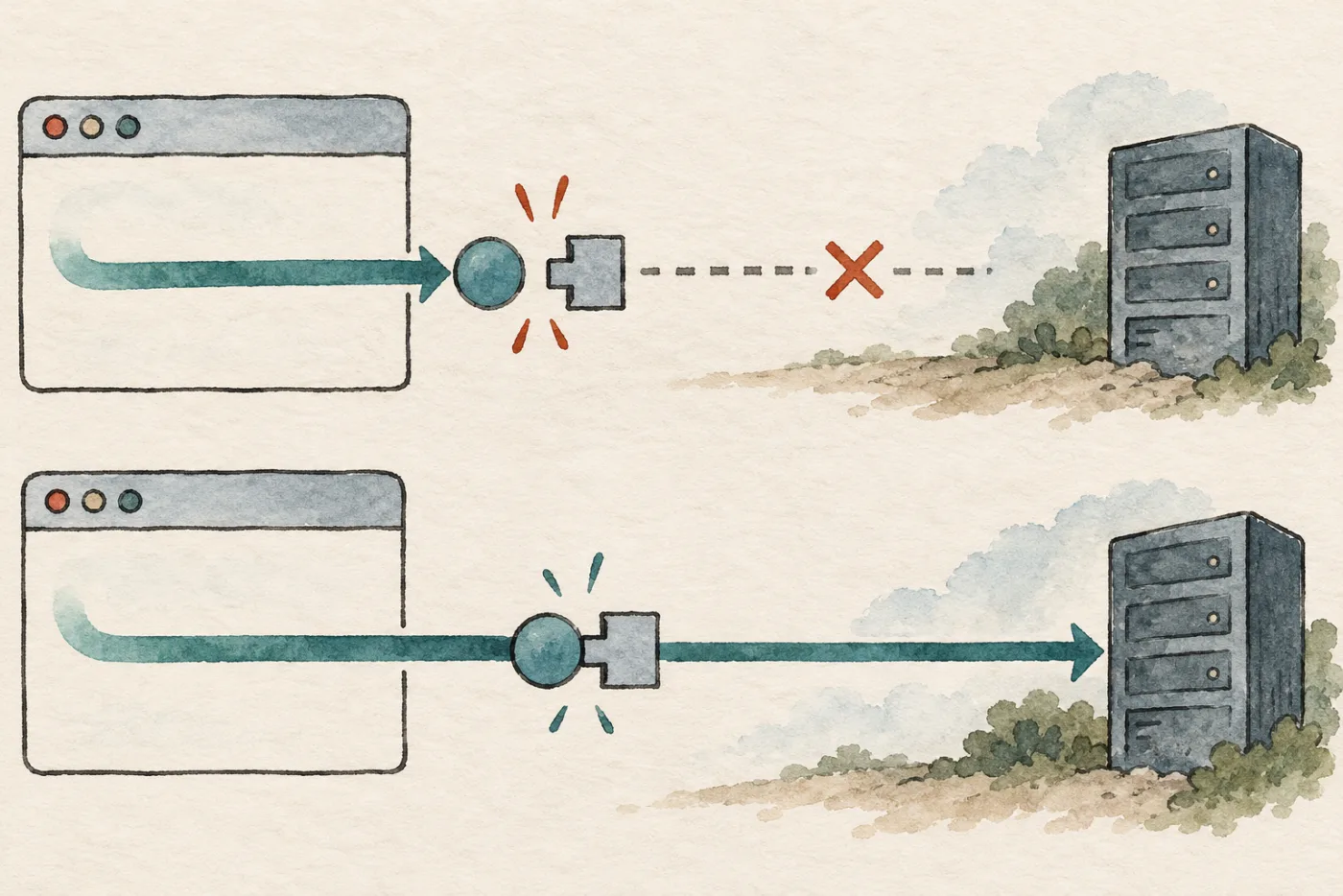
- Store the fetch functionThe SDK chose a custom fetch or global fetch.
- Call with wrong receiverThe browser rejected the method invocation.
- Preserve the receiverThe corrected call lets the request reach the network.
The receiver changed at the call site
The SDK’s transport accepted an optional custom fetch implementation. Otherwise it used globalThis.fetch. In simplified form, it stored that function on the transport and later called it as a method:
this.fetch = options.fetch ?? globalThis.fetch;
// Later:await this.fetch(input, init);
The assignment looked harmless. The call was the problem. In JavaScript, object.method() supplies object as the function’s this value. Here, the receiver was the Lore transport, even though the stored function came from window.fetch.
In the browser used for the self-hosted check, window.fetch rejected that receiver with TypeError: Failed to execute 'fetch' on 'Window': Illegal invocation. The SDK caught it and surfaced a generic transport error. That explains both symptoms: every UI call failed, and no request was sent.
Why the existing checks stayed green
The same SDK worked through Bun in the CLI and MCP adapter. Bun’s fetch accepted the method call. The test suite’s vi.fn() fetch stubs also accepted any receiver. Those checks exercised request handling, but they did not reproduce this browser constraint.
The fix resolves the implementation once, then stores a wrapper that calls it as a plain function:
const fetchImpl = options.fetch ?? globalThis.fetch;if (typeof fetchImpl !== "function") { throw new TypeError("A Fetch implementation is required");}this.fetch = (input, init) => fetchImpl(input, init);This keeps custom fetch injection while avoiding this.fetch(...) as the call to the host function. The change is small because the bug was at the JavaScript call boundary, not in request construction or the API.
A test that would have caught it
We added a receiver-checking SDK test. Its fake fetch throws when called with an unexpected this value, as the browser did in this incident. The test fails against the old transport and passes with the wrapper.
That is the useful distinction: a mock that returns the right response is not always a faithful mock of the platform API. At a browser boundary, the way a function is called can be part of the behavior under test.
After the change, the SDK checks passed and a self-hosted browser deployment loaded its existing workspaces and memories. The result is deliberately narrow: this fixed the receiver error and restored those UI requests; it does not claim that every browser transport path is covered by one unit test.
When a UI reports a request failure and the Network panel shows nothing, check for a local exception before debugging the server. In this case, the request never got that far.